About
About Kaiari Labs
Kaiari Labs began long before the name existed.
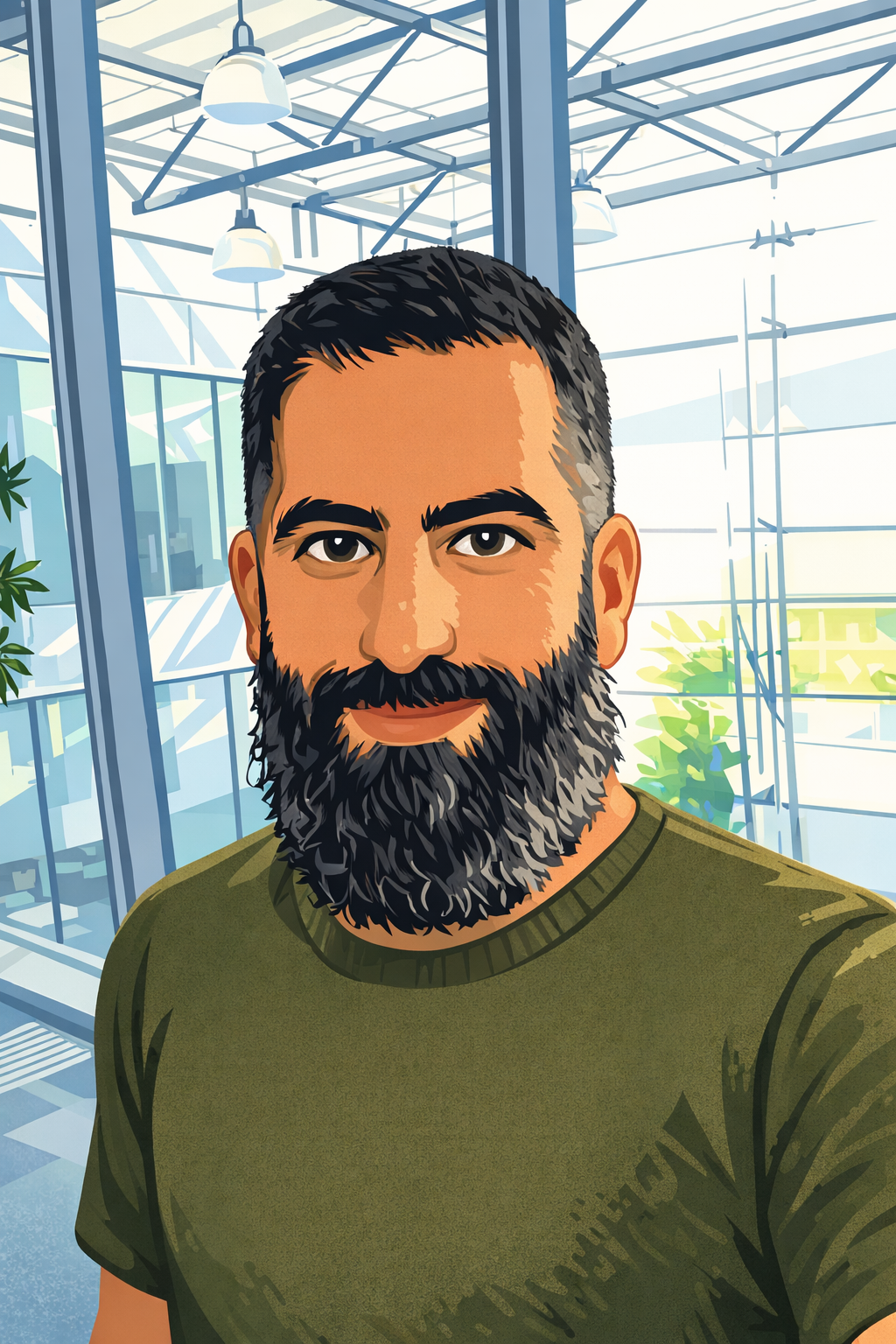
— Rachid El Khayari, founder.
The beginning
I was 11 years old, sitting in front of a Commodore 64, discovering that software was not just something you used — it was something you could shape. One of the first programs I ever built was a simple word game in BASIC: player one would enter a word while player two closed their eyes, the computer would scramble the letters, and player two had to reconstruct the original word.
It was small, playful, and technically simple. But for me, it was a revelation.
For the first time, I experienced what it meant to turn an idea into behavior. You imagine something, express it clearly enough, and the machine does it. That moment never really left me.
Kaiari Labs is the long arc of that fascination.
The path
Today, I work at the intersection of software, cybersecurity, product design, and AI. That path took me through mobile security research at the Fraunhofer Institute for Secure Information Technology, finding invisible vulnerabilities in apps that worked perfectly until they didn't. I spoke at conferences like SwiftSofia and Pragma about security patterns most developers miss — not bugs in the code, but flaws in the assumptions beneath it.
That background shaped how I think about AI coding agents today.
The problem
Because what I see happening with AI-generated code looks strikingly similar to what I saw in mobile security: systems that appear to work, built on decisions that were never explicitly made. The vulnerability isn't in the output — it's in the invisible process between intention and execution.
I started researching this systematically. Sixteen controlled experiments. Ten categories of drift. Watching AI agents interpret vague instructions, make silent assumptions, and generate code that technically runs but doesn't match what the developer actually needed. I documented it as Exogenesis — a framework for understanding how and why AI agents drift from human intent.
The insight wasn't that AI can't code. It's that we've been treating a control problem as a capability problem.
The mission
Kaiari Labs exists to explore that problem space. To build tools, frameworks, and systems that treat intention as a first-class input — not an afterthought. To create software where clarity, constraints, and purpose shape what gets built, not just how it's built.
Some of that work becomes products. Some becomes research. Some becomes new ways of thinking about what software creation should look like when the keyboard is no longer the bottleneck.
All of it starts from the same instinct I had as a kid on that Commodore 64: technology becomes powerful when intention becomes real.
Kaiari Labs is my workshop for making that real.
— Rachid El Khayari, founder.